
Sleep Tourism Hotels: Recovery Suites & Rest-Focused Amenities
Sleep tourism hotels is emerging as a measurable operational opportunity within luxury hospitality.
For decades, hotels treated sleep primarily as a baseline expectation: a comfortable bed, blackout curtains, and quiet rooms. Today, however, guest expectations have evolved. Increasingly, travelers evaluate hotels based on their ability to support rest, recovery, and nervous system regulation.
This shift changes how operators must think about the guest room environment.
Sleep quality is not determined by a single amenity. It is the result of multiple environmental systems working in coordination: lighting, acoustics, temperature, air quality, and sensory stability. When those systems are aligned, they influence guest perception, physiological relaxation, and ultimately measurable business outcomes.
For hospitality leadership, the relevance is not philosophical. It is operational.
Sleep quality influences several key performance indicators:
- Guest satisfaction scores
- Online review sentiment
- Complaint frequency
- Loyalty program retention
- Average Daily Rate (ADR)
- Revenue Per Available Room (RevPAR)
Hotels that intentionally design environments supporting rest are not simply responding to a wellness trend. They are improving the conditions under which positive guest perception forms.
Sleep tourism hotels therefore represents a broader shift in hospitality operations, one where environmental control becomes part of the guest experience infrastructure.
The sections below explore how this shift is unfolding across the industry and where environmental systems, including scent, contribute to measurable operational outcomes within hotel sleep experience strategies.
Sleep Tourism and the Rising Value of Rest
Sleep is no longer a secondary amenity.
It is becoming a primary reason travelers choose a property.
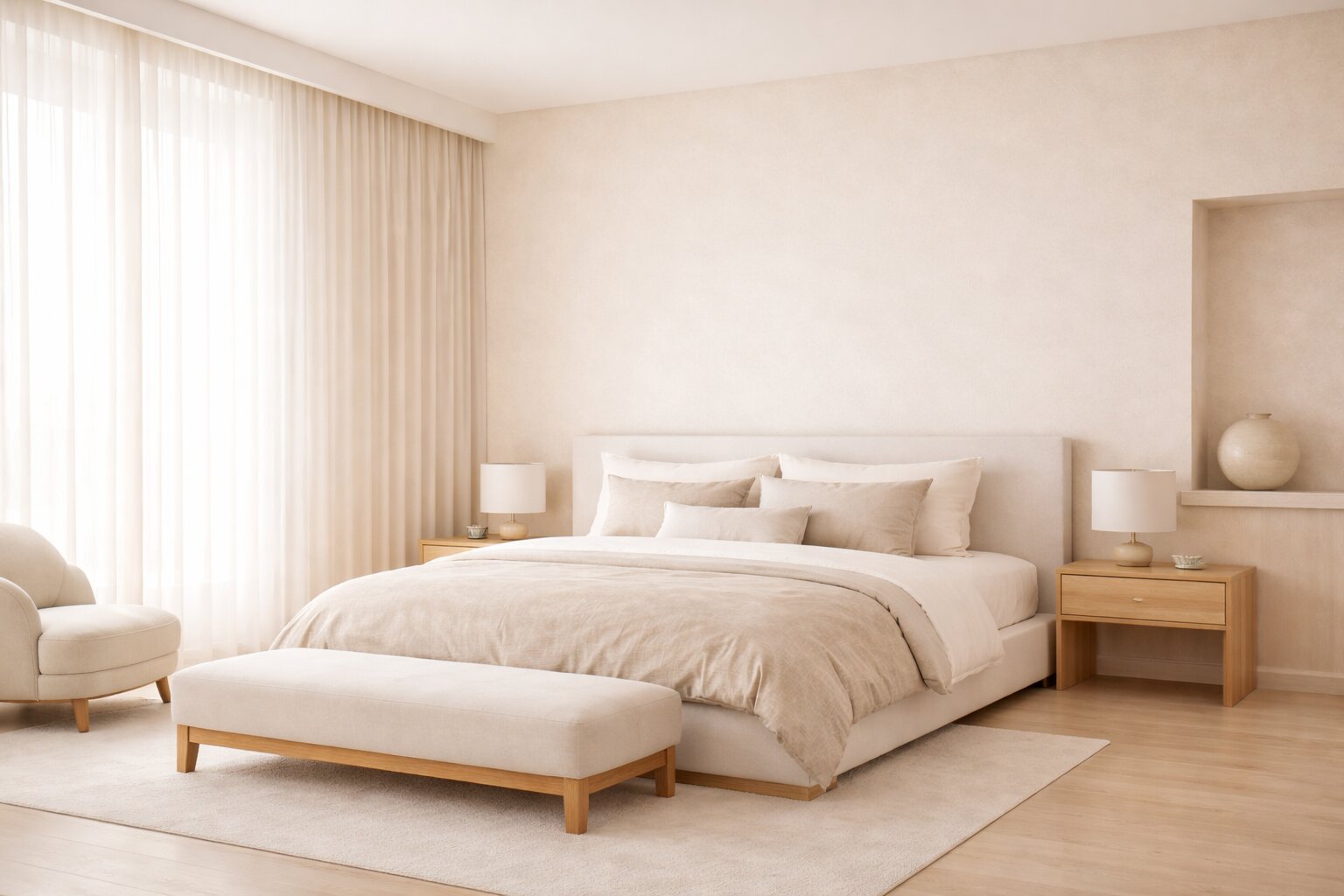
As recently highlighted by ABC News, hotels across the country are leaning into what’s being called sleep tourism hotels: investing in sleep-friendly hotel rooms, circadian lighting systems, sleep concierge services, and curated rest experiences.
For hospitality operators, this signals a structural shift:
Rest is now a competitive differentiator.
But while many properties focus on mattresses, blackout curtains, and lighting upgrades as part of hotel wellness amenities, there is one element that remains underleveraged in most sleep-forward strategies:
Environmental scent.
What Is Sleep Tourism and Why Are Hotels Investing in It?
Sleep tourism hotels refers to travel experiences designed specifically to improve rest, recovery, and overall sleep quality.
Guests are not just booking rooms. They are booking physiological outcomes.
Hotels responding to this shift are investing in:
- Recovery suites with circadian lighting
- Advanced temperature regulation
- Acoustic soundproofing
- Sleep-enhancing bedding systems
- Guided wind-down rituals
- In-room wellness technology
These hotel wellness amenities are becoming especially relevant in luxury hospitality, where experiential differentiation drives ADR growth.
For general managers and asset owners, the opportunity lies in repositioning sleep not as a feature, but as a flagship offering.
Why Is Sleep Becoming a Luxury Travel Priority?
Several macro shifts are fueling this movement:
- Burnout culture and executive fatigue
- Increased awareness of sleep science
- Growth of wellness tourism
- Biohacking and performance optimization trends
Travelers are more educated about sleep than ever before. They understand that sleep affects immunity, cognitive function, mood, and longevity.
Hotels that can credibly support restorative sleep are positioning themselves in the premium wellness segment.
But an effective hotel sleep experience is multisensory.
And scent plays a direct neurological role.
How Does Smell Affect Sleep Quality and Recovery?
Olfaction (our sense of smell) is directly connected to the limbic system: the area of the brain responsible for emotion, memory, and autonomic regulation.
Unlike visual or auditory signals, scent bypasses cognitive filtering and produces immediate physiological responses.
According to the Sleep Foundation, certain aromas can help reduce stress levels and support relaxation before sleep. Their review of scientific studies highlights how scent influences mood regulation and sleep onset.
For hotel operators investing in sleep tourism hotels, this confirms a critical design principle:
Sleep quality is influenced not just by what guests see or feel. But by what they smell.
When scent is aligned with lighting, acoustics, and temperature, it reinforces the nervous system signals that allow sleep to occur within a carefully planned hotel sleep experience.
Why Are Most Sleep-Focused Hotel Suites Missing a Sensory Layer?
Many properties investing in sleep tourism hotels upgrades focus on tangible assets:
- Premium mattresses
- Blackout technology
- Smart thermostats
- Noise reduction systems
These are essential hotel wellness amenities, but they address only part of the guest experience.
If a guest enters a hotel rooms and detects cleaning chemical residue or neutral stale air, the subconscious perception of safety is disrupted.
Environmental scent, when applied with restraint, can:
- Signal calm
- Reduce perceived stress
- Enhance emotional comfort
- Create continuity between public and private spaces
In our foundational pillar, Scent Marketing Strategy for Hospitality & Senior Living, we explore how scent shapes perception before conscious evaluation begins.
Sleep tourism strategies that omit scent integration risk delivering an incomplete experience.
Operational Systems That Influence Sleep Tourism Performance
Sleep tourism is often introduced as a guest-facing concept, but its effectiveness depends on operational control behind the scenes.
Rest is highly sensitive to environmental stability. Even small inconsistencies within the built environment, fluctuating temperatures, abrupt lighting changes, hallway disturbances, or lingering chemical odors can disrupt a guest’s ability to settle into sleep.
For hotel operators, this shifts the focus from isolated amenities to environmental coordination. Sleep-friendly hotel rooms perform best when multiple environmental variables operate predictably together.
These typically include:
- Lighting behavior during evening hours
- Temperature stability across guest rooms
- Acoustic buffering between corridors and floors
- Air quality and ambient environmental conditions
Environmental scent systems can support this coordination by maintaining a neutral and stable sensory backdrop within guest spaces.
When these environmental variables are managed as a unified system rather than separate upgrades, the guest room becomes more conducive to rest.
The framework below outlines how these environmental controls translate into operational interventions within sleep-focused hospitality environments.
Operational Implementation Framework
The table below summarizes how environmental systems contribute to measurable sleep tourism outcomes.
| Operational Area | System Intervention | KPI Impact | Implementation Complexity |
| Guest Room Environment | Circadian lighting and temperature control | Higher guest satisfaction scores | Medium |
| Recovery Suites | Dedicated sleep-focused room categories | ADR growth and premium pricing | Medium |
| Environmental Stability | Environmental scent system integration | Complaint reduction and emotional comfort | Low |
| Brand Experience Consistency | Coordinated sensory environment across hotel spaces | Stronger brand memory and loyalty | Medium |
| Wellness Packages | Sleep-focused guest offerings | RevPAR growth through upsells | Medium |
This operational framing helps hospitality leaders treat sleep tourism hotels as an integrated environmental system rather than a collection of isolated amenities.
Can Environmental Scent Improve Guest Satisfaction Scores?
Guest satisfaction is strongly influenced by emotional state.
When guests feel relaxed, safe, and regulated, they rate experiences more favorably.
Scent contributes to:
- Perceived cleanliness
- Ambient comfort
- Brand cohesion
- Emotional memory formation
As explored in our article, Scent Branding vs. Air Freshening: What Operators Get Wrong sensory environments impact dwell time, satisfaction, and perceived value.
For operators, this is not about fragrance as décor, it is about environmental regulation.
What Should GMs Consider When Designing a Sleep-Focused Recovery Suite?
If your property is exploring sleep tourism positioning, evaluate the following:
1. Scent Delivery Method
Cold-air diffusion systems provide clean, consistent dispersion without residue or heat degradation.
2. Intensity Programming
Evening ramp-down programming supports circadian alignment without overwhelming guests.
3. Safety & Compliance
All fragrances should meet IFRA standards and be appropriate for continuous exposure.
4. Brand Alignment
Scent should support your property’s emotional positioning. Within sleep-friendly hotel rooms and other hotel wellness amenities, luxury restraint is critical. Over-scenting can disrupt trust.
How Can Hotels Monetize the Sleep Tourism Trend?
Sleep-forward positioning creates multiple revenue pathways:
- Premium hotel recovery suite upsells
- Wellness packages
- Corporate retreat positioning
- Loyalty program differentiation
- Extended-stay optimization
The global wellness tourism market continues to expand, and rest-based travel is a logical evolution.
Hotels that build sleep credibility can:
- Increase ADR
- Improve review sentiment
- Drive repeat stays
- Strengthen brand distinctiveness
Environmental scent design becomes a supporting infrastructure in that revenue model.
Is Sleep Tourism Just a Trend or a Long-Term Shift?
Short answer: Sleep tourism hotels reflects a broader recalibration of luxury.
Modern luxury is shifting from visual opulence to physiological benefit.
Guests increasingly value:
- Nervous system calm
- Emotional safety
- Recovery support
- Wellness alignment
Hotels that treat sleep tourism as a surface-level marketing hook may see short-term gains.
Hotels that integrate environmental design across sensory channels, including scent, will create sustainable differentiation.
Frequently Asked Questions (FAQ)
What is sleep tourism in hospitality?
Sleep tourism hotels refers to travel experiences specifically designed to improve rest and sleep quality, often through sleep-friendly hotel rooms, specialized amenities, and wellness programming.
Does scent actually help improve sleep in hotels?
Research cited by the Sleep Foundation indicates that certain aromas can support relaxation and improve sleep onset by influencing emotional and neurological pathways.
How can hotels safely implement scent in sleep-focused rooms?
Hotels should use IFRA-compliant fragrances delivered through cold-air diffusion systems, programmed at low intensity to support hotel wellness amenities without guest discomfort.
Can environmental scent increase hotel revenue?
While scent alone does not drive revenue, it enhances guest perception, emotional comfort, and brand differentiation, all of which influence ADR and satisfaction metrics.
Should luxury hotels create a signature sleep scent?
Yes, if executed with restraint. A calming scent aligned with brand identity can reinforce emotional memory and repeat visitation within hotel sleep experience strategies.
Conclusion: Strategic Takeaway for Hospitality Operators
Sleep tourism hotels is not about adding another amenity.
It is about designing an environment that supports restoration at a neurological level.
Lighting. Acoustics. Temperature. Air quality. And scent.
Hotels that understand the full sensory equation will not simply participate in the sleep trend.
Plan your scent strategy.
Tell us about your property. We’ll follow up with next steps.